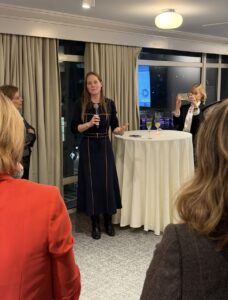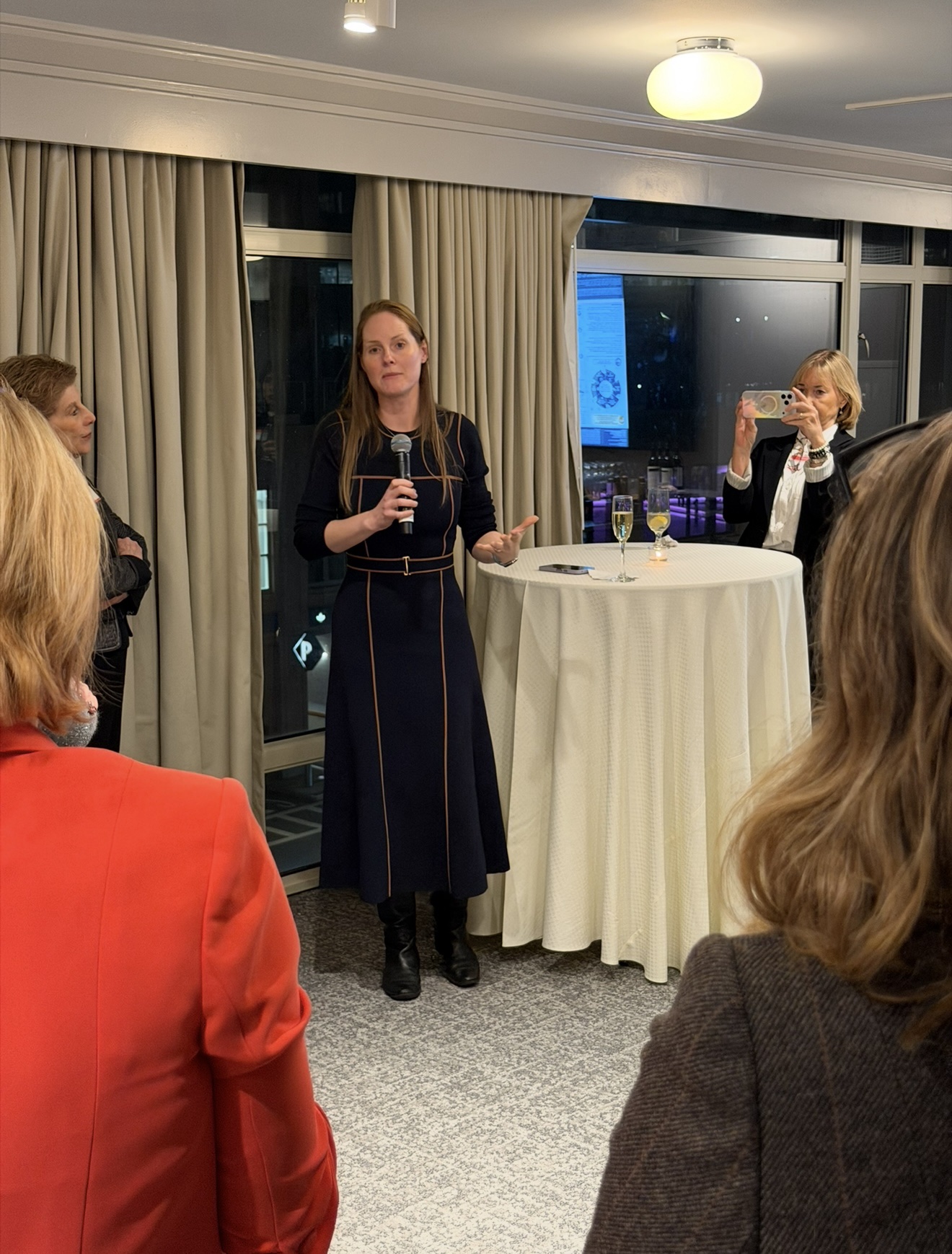
The Coalition for Women’s Brain Health (CWBH) was pleased to bring together members of its Steering Committee, along with researchers, clinicians, advocates, and other leaders during the Clinical Trials on Alzheimer’s Disease (CTAD) conference for an in-person Steering Committee meeting followed by the CWBH & Friends: Meet the Authors Networking Reception on November 17, 2026, in Boston, MA.
The Steering Committee meeting provided an opportunity for members to reflect on the Coalition’s accomplishments, discuss progress on its research initiatives, and explore strategic priorities for the years ahead. Members also participated in interactive discussions focused on translating research findings into meaningful action, identifying opportunities to amplify the Coalition’s work, and strengthening collaboration across the women’s brain health community.
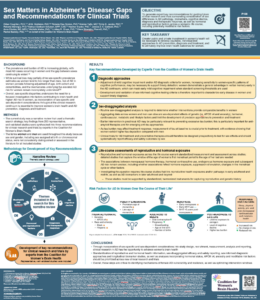
The reception celebrated the work behind “Sex Matters in Alzheimer’s Disease: Gaps and Recommendations for Clinical Trials,” presented as Poster P166 at CTAD. The gathering created an opportunity to recognize the publication’s authors, exchange ideas, and continue building connections around a shared goal: ensuring that sex-based differences are more fully understood and addressed in Alzheimer’s disease research and clinical trials.
“It’s a very specific review that targets the latest research, where we really want to know what is happening right now from some of the biggest groups out there. We’re pulling that together to establish a very strong theme across reproductive factors, both earlier and later in life: from adolescence through pregnancy, menopause, and onward.” – Rachel Buckley, PhD
Women are disproportionately affected by Alzheimer’s disease, yet important gaps remain in how sex is considered across the research continuum, from study design and recruitment to data analysis, reporting, and the development of prevention and treatment strategies. The poster and publication underscore the importance of stronger, more consistent approaches to sex-based research in order to advance more representative evidence and improve outcomes for all people affected by Alzheimer’s disease.
Building on these findings, Steering Committee members discussed opportunities to broaden the reach of the research through scientific dissemination, education, communications, and partnerships. The meeting also provided an opportunity to revisit CWBH’s original strategic action plan and consider where the Coalition can make the greatest impact as it looks toward 2027 and beyond.
CWBH is grateful to Rachel Buckley, Gillian Coughlan, and the members of the CWBH Steering Committee for their leadership, expertise, and important contributions to this publication and to advancing women’s brain health.
Our appreciation also goes to colleagues and partners at Avalere Health, Genentech, and the Women’s Alzheimer’s Movement (WAM) at Cleveland Clinic, and to all who joined us during CTAD for thoughtful discussion and collaboration.
CWBH looks forward to continuing the conversation and advancing research, education, and collaboration that recognize sex-based differences as a critical component of brain health. The ideas and perspectives shared during this year’s in-person meeting will help inform the Coalition’s ongoing strategic discussions and future opportunities for collaboration.
“We’re also trying to see what all those elements—any of the evidence that we have so far—can tell us about later life and neurodegenerative disease, with a very strong focus on Alzheimer’s disease, because that’s where a lot of our evidence currently exists. From there, we are now starting to build our recommendations.
There’s a couple of things that we’re thinking are low-hanging fruit, one of which is to simply study reproductive factors in the current aging cohorts that we have. It’s a very simple, low-hanging fruit.
We can do surveys. One in particular that we would all like to target is coming from Emily Jacobs’ group, the Women’s Brain Health Initiative, where they have a standardized menopause and reproductive questionnaire that they want to roll out across the world. We’re hoping that we can really have that as a big proponent.” – Rachel Buckley, PhD